HERCULES Cost-Effective Super Strong 4 Strands Braided Fishing Line 6LB to 100LB Test for Salt-Water, 109/328 / 547/1094 Yards (100M / 300M / 500M / 1000M), Diam# 0.08MM – 0.55MM, Hi-Grade
$19.99 (as of September 15, 2026 17:21 GMT +00:00 – More infoProduct prices and availability are accurate as of the date/time indicated and are subject to change. Any price and availability information displayed on [relevant Amazon Site(s), as applicable] at the time of purchase will apply to the purchase of this product.)
NFL Gameday Cotton Blend T-Shirt for Men and Women – Licensed | Officially licensed NFL gameday cotton blend tee with thermal print team graphics – tagless fit S to 5XL
$29.95 (as of September 15, 2026 17:44 GMT +00:00 – More infoProduct prices and availability are accurate as of the date/time indicated and are subject to change. Any price and availability information displayed on [relevant Amazon Site(s), as applicable] at the time of purchase will apply to the purchase of this product.)
Ultra Game Men’s NFL Official Super Soft Supreme Long Sleeve T-Shirt
$33.99 (as of September 15, 2026 17:44 GMT +00:00 – More infoProduct prices and availability are accurate as of the date/time indicated and are subject to change. Any price and availability information displayed on [relevant Amazon Site(s), as applicable] at the time of purchase will apply to the purchase of this product.)
Wes and Willy NCAA Kids Short Sleeve Organic Cotton Tee Shirt
(as of September 15, 2026 17:21 GMT +00:00 – More infoProduct prices and availability are accurate as of the date/time indicated and are subject to change. Any price and availability information displayed on [relevant Amazon Site(s), as applicable] at the time of purchase will apply to the purchase of this product.)
CAP Vinyl Coated Cast Iron Kettlebell, 10-50 LB Home Gym Weight
$39.99 (as of September 15, 2026 17:44 GMT +00:00 – More infoProduct prices and availability are accurate as of the date/time indicated and are subject to change. Any price and availability information displayed on [relevant Amazon Site(s), as applicable] at the time of purchase will apply to the purchase of this product.)Many residents of Los Angeles face unique challenges from earthquakes, wildfires, and potential blackouts. To protect yourself and your family, you need practical strategies tailored to urban living, especially if you’re in fire-prone neighborhoods like Pasadena or the Hollywood Hills. This guide will help you optimize limited space for water storage, prepare your apartment for wildfire smoke, harness solar tech during outages, and build a get-home bag fit for freeway emergencies. By staying informed and proactive, you can enhance your readiness for whatever the city’s natural threats may bring.
Key Takeaways:
- Identify common urban threats in LA such as earthquakes, wildfires, and power outages to tailor your preparedness efforts.
- Maximize water storage in small spaces using stackable containers, collapsible jugs, or wall-mounted reservoirs suitable for apartments.
- Prepare indoor air quality solutions like air purifiers and N95 masks to combat wildfire smoke when living in multi-unit buildings.
- Incorporate solar-powered devices like chargers and lanterns to maintain vital functions during extended blackouts.
- Build a streamlined get-home bag with navigation aids, hydration, snacks, and first aid, especially for freeway commuters in high-risk areas.
Navigating LA’s Urban Threats: Earthquakes, Fires, and Blackouts
Living in Los Angeles means facing a unique blend of natural risks that demand tailored preparation. Earthquakes strike without warning, wildfires frequently threaten hillside communities like Pasadena and the Hollywood Hills, and urban blackouts test your resilience. Managing these requires a clear understanding of each threat’s characteristics and impact, along with practical steps that fit your living space. Balancing preparedness across these scenarios equips you to protect your home, health, and mobility in the city’s dynamic environment.
Understanding Seismic Risks: What LA Residents Should Know
The San Andreas and other fault lines make earthquakes a constant hazard in LA, with minor tremors happening daily. Structures built before the 1994 Northridge quake often need retrofitting; knowing if your building complies with modern codes can affect your safety. Securing heavy furniture, creating easy access to water, and planning exit routes from your apartment or home will help you react swiftly. Since aftershocks may follow, having extra supplies for several days is key to sustaining yourself if emergency services take time to respond.
Fire Season Readiness: Strategies for Urban Dwellers
Dry Santa Ana winds and dense brush elevate wildfire risks in areas like Santa Clarita and Hollywood Hills, where smoke can infiltrate even sealed apartments. Cat-scale air purifiers with HEPA filters can significantly improve indoor air quality. Store N95 masks and keep fire extinguishers accessible. Creating defensible space by clearing flammable materials near your building’s perimeter, even on balconies or patios, minimizes ignition chances. Staying updated through LA Fire Department alerts and having a pre-packed evacuation bag will make transitions smoother if evacuation orders come.
Beyond indoor air protection and evacuation readiness, evaluating your building’s fire prevention features adds another layer of defense. Check that common areas have functioning sprinklers and accessible fire escapes. Engage with neighbors to develop a communication plan during emergencies, as local coordination can fill gaps during high-demand periods. Landscaping choices matter too—fire-resistant plants and non-combustible planters reduce risks on patios or shared courtyards. Combining technological aids with community preparedness creates resilience in wildfire-prone urban zones.
Water Storage Solutions for Apartment Living
Space constraints in LA apartments demand creative approaches to water storage without compromising emergency preparedness. Storing at least one gallon per person daily for a minimum of three days can be challenging but achievable by combining stackable containers and utilizing hidden nooks—under beds, behind furniture, or in closets. You might also repurpose existing containers like bottled water packs or collapsible water bladders designed for compact storage. Balancing access and volume ensures you have enough water to stay hydrated during multi-day blackouts or post-earthquake disruptions.
Best Practices for Maximizing Tight Spaces
Utilize vertical space with slim, tall water bottles that fit alongside shelving or in cupboards. Nest smaller bottles inside luggage or vacuum-sealed storage bins that double as seat cushions or extra storage. Consider multi-use containers, such as water bricks, stackable and flattened when empty, allowing you to store several gallons without clutter. Rotate stored water every six months by using it for cooking or plants, then refill, keeping your supply fresh without the need for extra space-consuming purchases.
Innovative Containers That Fit Your Lifestyle
Flat water pouches designed for backpackers slip easily between furniture or behind appliances without sacrificing gallons. BPA-free water bricks stack securely and withstand high temperatures, perfect for earthquake-prone LA. Collapsible silicone jugs compress after use, saving room for other necessarys. Some containers even integrate into furniture, like water-storing ottomans or benches, blending preparedness with your apartment’s aesthetic.
Expanding on innovative containers, water bricks like those from companies such as WaterBOB or Aquatank offer airtight seals and can be filled from taps or rainwater catchments. Their rectangular shape maximizes storage density, fitting neatly in closets or under desks. Flat, flexible pouches from brands like Platypus or MSR weigh less than traditional jugs and flatten drastically when empty, easing transport during evacuation or bug-out scenarios. Collapsible silicone containers withstand heat and cold, reducing risk during wildfires or blackouts, and fold down to pocket size. Integrating water storage into your furniture frees up floor space, keeping emergency water accessible without disrupting your living area harmony.
Smoke Preparedness: Protecting Your Indoor Air Quality
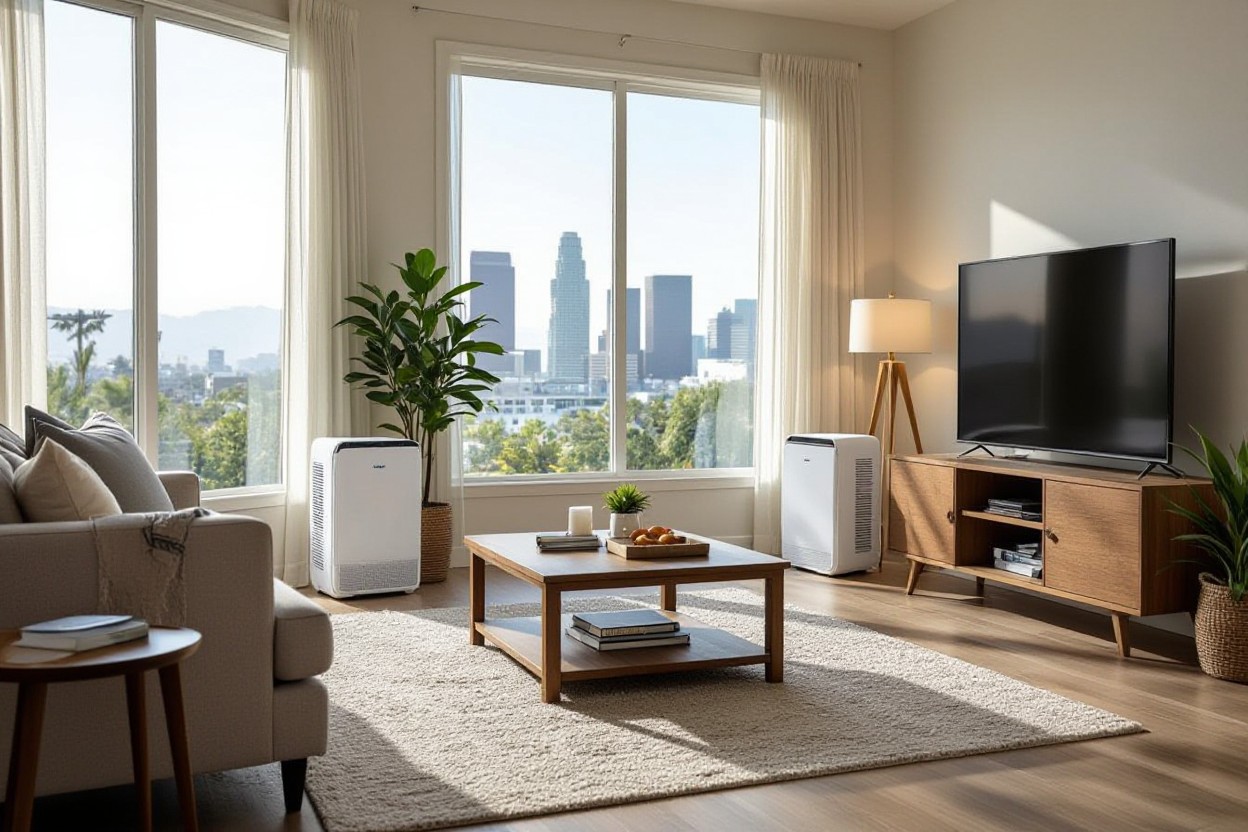
Wildfire smoke can penetrate sealed apartment windows, turning your home into a trapped haze of harmful particles. Keeping indoor air clean means sealing gaps with weatherstripping, using air purifiers with HEPA filters, and closing vents when fires approach. Monitoring AQI (Air Quality Index) levels via apps like AIRNow helps you decide if staying indoors or using filtered breathing masks becomes necessary. Maintaining a smoke-safe zone in your living space reduces respiratory stress, especially in highly vulnerable areas like Pasadena or Santa Clarita where wildfire smoke is a recurring hazard.
DIY Hacks for Filtering Air in Small Spaces
Creating a low-cost air filter uses a box fan paired with a high-grade furnace filter (MERV 13 or higher) taped securely over the intake side. Running this on medium speed in smaller rooms can reduce PM2.5 particles by up to 60%. Position the setup near windows or doors letting in smoke to trap pollutants before they spread. Another hack involves damp microfiber cloths over open vents or fans to capture some airborne ash. These tactics deliver immediate relief without expensive devices, perfect for apartments where space and budget are limited.
Essential Supplies for Smoke Bill Preparedness
Stock up on N95 respirators to effectively block fine smoke particles, especially if you must venture outdoors during poor air quality days. Store sealed HEPA air purifiers or portable ionizers for quick deployment in living areas. Have replacement furnace or HVAC filters rated MERV 13+ on hand to upgrade your system for smoke season. Wet wipes and eye drops soothe irritation caused by persistent haze, and an air quality monitor ensures you track safety levels accurately inside your home.
Beyond masks and purifiers, including sealed containers of saline nasal spray helps clear nasal passages affected by irritants. Battery backups or portable power banks can keep air purifiers running through outages. For multi-room coverage, inexpensive small desktop or tower purifiers should supplement your main unit. Careful rotation of filters and timely disposal of used masks prevents secondary contamination. Many in fire-prone neighborhoods find assembling a “smoke kit” hassle-free when prioritized alongside other emergency supplies, making preparation proactive rather than reactive.
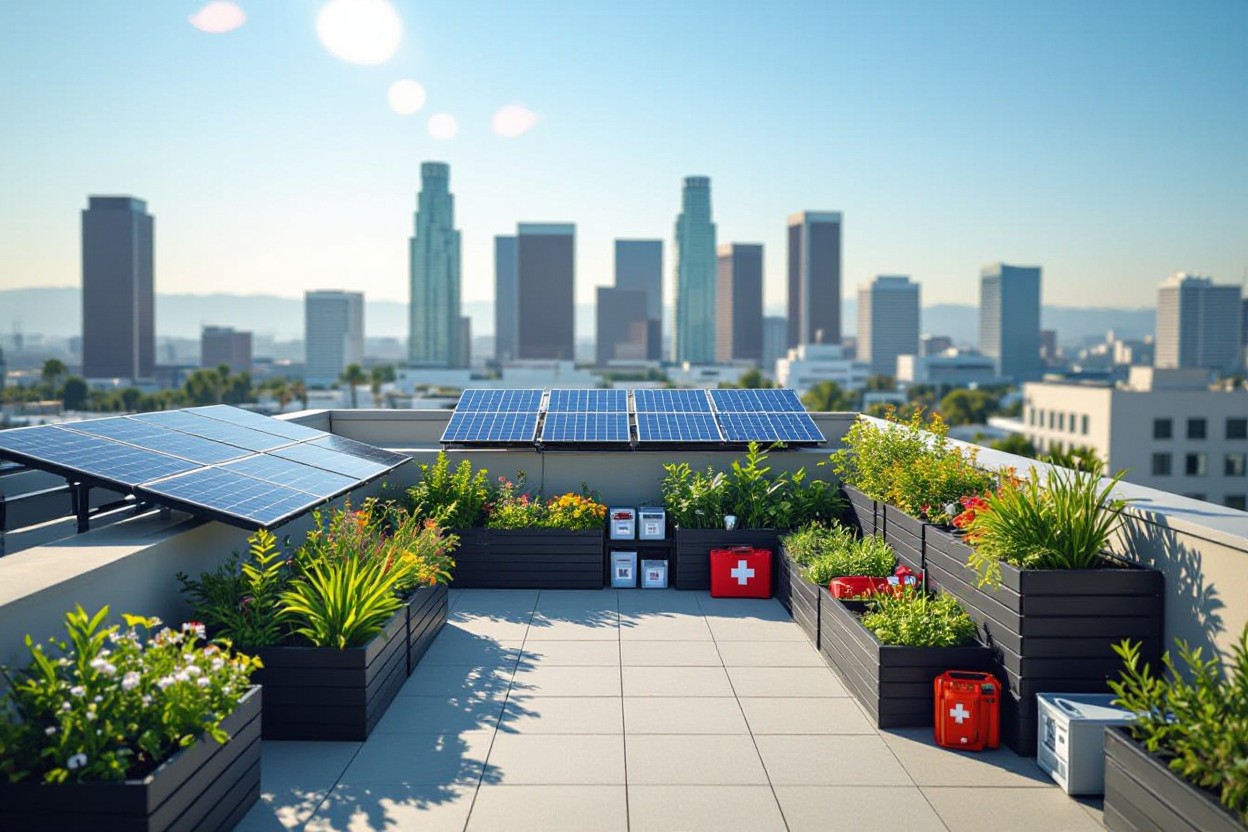
Empowering Urban Survival: Solar Tech for Power Outages
Reliable energy becomes a lifeline when wildfires, earthquakes, or grid failures plunge your neighborhood into darkness. Compact solar kits and portable panels transform balconies or small patios into personal power stations, keeping phones charged, medical devices running, and emergency radios on. Neighborhood grid instability in places like Pasadena or the Hollywood Hills can last days, so tapping into solar tech prevents total disconnection. Urban survival blends innovating small-scale solutions with LA’s climate realities—letting you reclaim power even when the city goes dark.
Must-Have Solar Gadgets for City Life
Solar chargers with 20-40 watt panels fit perfectly on apartment balconies, charging power banks and smaller devices efficiently. Portable solar generators with 200-500 watt-hours capacity keep imperatives—LED lights, mini fridges, and radios—running during extended outages. Solar-powered lanterns and compact USB panels provide versatile lighting and charging options while you’re on the move. Prioritize gear that’s lightweight, quiet, and suited to limited space, ideal for fast responses when wildfires spread or quakes disrupt power grids in dense LA neighborhoods.
Setting Up a Solar Backup System at Home
Integrating a solar backup system into your apartment or house helps you maintain key electrical functions during outages. Start with a portable solar generator paired with foldable panels to store 300-600 watt-hours daily. The system should support critical loads like phone chargers, LED lighting, and small fans to combat smoke infiltration. In fire-prone zones like Santa Clarita, ensure your setup withstands power surges and communicates with grid outages, enabling quick switching to solar power without complex installations or permits.
A typical entry-level setup includes a 400Wh lithium battery generator (like the Jackery Explorer 500) combined with a 100W foldable solar panel. This combination can recharge phones and keep an emergency radio powered multiple days without sunlight interruption. Mount panels on south-facing balconies or portable stands, optimizing sun exposure. Adding a smart transfer switch enhances system usability by isolating critical circuits during blackouts—ideal for maintaining oxygen machines or sump pumps. Local fire season surges in demand for such systems highlight their practicality in dense urban settings where utility restoration can delay for 72 hours or more.
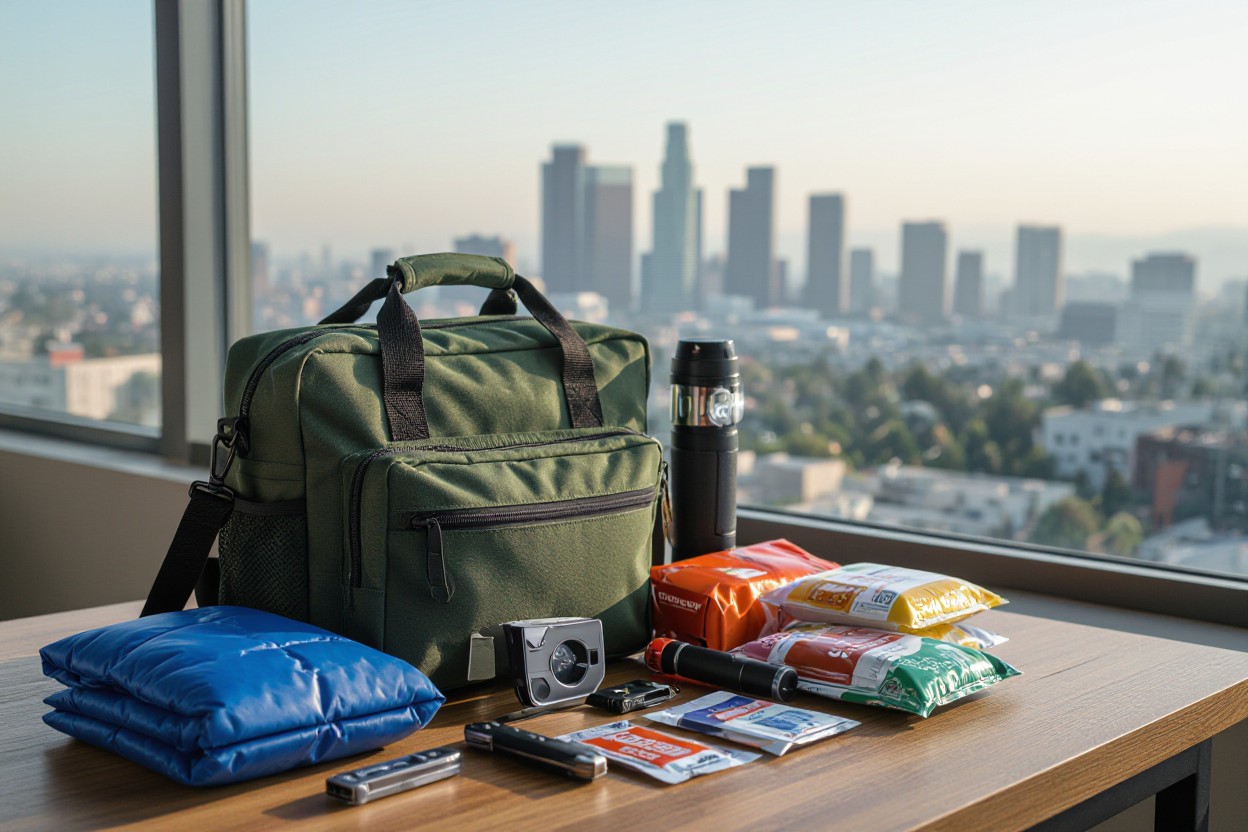
Get-Home Bag Essentials for Commuters
Stuck in LA freeway traffic when disaster strikes means your get-home bag can be the difference between discomfort and safety. Compact but comprehensive packing lets you handle delays caused by earthquakes, fires, or blackouts while navigating from areas like Pasadena or the Hollywood Hills. Your kit needs to accommodate the unpredictable stretch of time it can take to get home, often several hours, while offering protection against smoky air and basic survival needs.
Tailoring Your Go-Bag for LA Freeways
Traffic jams on the 210 or I-5 during emergencies can last for hours, so your bag should prioritize hydration with at least two liters of water and lightweight snacks for energy. Dust masks or N95 respirators protect you from wildfire smoke, while a small, portable solar charger keeps your phone alive for navigation or emergency calls. Compact rain or thermal blankets add warmth during nighttime delays, making your kit a practical shield against LA’s unpredictable urban hazards.
Key Items Every Commuter Should Pack
Packing a sturdy flashlight with extra batteries, a multi-tool, and a first aid kit can address minor injuries or mechanical issues. High-energy bars or trail mix with electrolytes keep you fueled, while a whistle and reflective vest improve visibility to responders. Adding a compact power bank alongside your solar charger ensures multiple charging options. A small notebook with pen helps track others or leave notes if separated, supporting communication beyond your phone’s reach.
Diving deeper, consider including an emergency blanket that packs down small yet offers vital warmth if you’re stopped overnight. Since wildfire smoke can trigger asthma or irritate your lungs, pack extra inhalers or medications if needed. For those with pets, a collapsible water bowl and leash can safeguard your animal companions stuck in traffic. In an LA blackout, chemical light sticks substitute well for batteries, while water purification tablets extend your water supply, especially when water sources may be compromised after an earthquake or fire.
Building Community Resilience: Local Meetups and CERT Programs
Forming connections with neighbors and local groups strengthens your ability to respond when disaster hits. You can exchange practical tips on water storage in small apartments or share updates about wildfire smoke alerts specific to neighborhoods like Pasadena or the Hollywood Hills. Getting involved with community meetups or CERT programs offers you ongoing training and an immediate support network. Explore more about Disaster Preparedness resources to find nearby opportunities that fit into your routine and location.
The Value of Local Networking in Emergencies
Networking locally connects you with people who understand the unique challenges of living in fire-prone and earthquake-sensitive areas. When grid failures occur, having a trusted group sharing practical advice on solar tech or blackouts can provide you with faster solutions. Neighbors can coordinate water-sharing plans or help monitor wildfire smoke levels, making you less isolated during crises. Each connection increases your collective resilience and quickens recovery.
Joining Forces: How CERT Can Enhance Your Preparedness
Joining a Community Emergency Response Team (CERT) gives you hands-on disaster response skills tailored for urban LA. Training covers everything from basic first aid to fire suppression, enabling you to assist yourself and others during power outages or wildfires common in places like Santa Clarita. You’ll gain confidence in emergency communications and learn to assess hazards, turning your preparedness from individual to communal strength.
CERT programs also focus on practical drills that mirror local threats, such as earthquake aftermath scenarios or coordinating shelter operations during prolonged blackouts. You’ll meet neighbors who may become key allies in emergencies, expanding your network beyond casual acquaintances to trained responders ready to act. With over 200 active CERT teams across LA County, including in high-risk zones, involvement means tapping into proven response systems that can significantly improve your survival and recovery chances.
To wrap up
Considering all points, being disaster-ready in Los Angeles means tailoring your preparedness to urban challenges like earthquakes, wildfires, and power outages. You can maximize limited space with smart water storage, protect your indoor air from wildfire smoke, and rely on solar-powered tools during blackouts. Keep a well-equipped get-home bag handy if you commute on busy freeways, and engage with local meetups or CERT programs to strengthen your readiness network. Taking these steps empowers you to face emergencies confidently and protect your household in this dynamic urban environment.
FAQ
Q: What are the most effective water storage options for small apartments in LA?
A: For limited spaces, consider collapsible water containers, stackable water bricks, or slim water storage tanks designed for urban environments. These options maximize storage without taking up much floor space. Additionally, using water filter systems can allow you to safely store and treat smaller amounts of water over time.
Q: How can residents protect themselves from wildfire smoke while living in apartments?
A: To reduce smoke infiltration, seal windows and doors with weather stripping or damp towels. Use portable air purifiers equipped with HEPA filters to improve indoor air quality. Keeping HVAC systems off or using high-quality filters designed to trap fine particles can also help limit smoke exposure.
Q: What solar-powered devices are best for surviving long urban blackouts?
A: Compact solar chargers with battery storage are ideal for powering necessary devices like smartphones, radios, and small lights. Solar lanterns and foldable solar panels offer portable and silent energy sources. Look for products rated for multiple charge cycles and capable of powering low-wattage appliances during outages.
Q: What items should freeway commuters include in their get-home bags for emergencies?
A: A get-home bag should have water, non-perishable snacks, a first aid kit, a flashlight with extra batteries, a multi-tool, face masks for smoke, a portable phone charger, and copies of important identification. Including local maps and communication plans can also aid in navigating disrupted routes.
Q: How can locals get involved with neighborhood preparedness programs like CERT in LA?
A: Many neighborhoods in the LA metro area offer Community Emergency Response Team (CERT) training and local meetups through city or community websites. Interested residents can sign up online, attend orientation sessions, and participate in drills to build skills and connect with others focused on urban disaster readiness.
Author

Dragon Shield | Matte Dual Standard Size Card Sleeves | 100ct – Smooth & Tough Premium TCG Sleeves – Compatible with Pokemon, One Piece, and Magic: The Gathering | Black & Gold
$12.99 (as of September 15, 2026 17:44 GMT +00:00 – More infoProduct prices and availability are accurate as of the date/time indicated and are subject to change. Any price and availability information displayed on [relevant Amazon Site(s), as applicable] at the time of purchase will apply to the purchase of this product.)
LHKNL Headlamp Flashlight, Lumen Bright Head Lamps LED Rechargeable Camping | Ultra-Light, with White Red Light, 2-Pack Waterproof Motion Sensor Headlight, 8 Modes for Outdoor Running Hiking Fishing
$19.99 (as of September 15, 2026 17:44 GMT +00:00 – More infoProduct prices and availability are accurate as of the date/time indicated and are subject to change. Any price and availability information displayed on [relevant Amazon Site(s), as applicable] at the time of purchase will apply to the purchase of this product.)
Renoj Weighted Vest for Women Men: Available in 6lb/8lb/10lb/11lb/12lb/14lb/16lb/20lb Fixed Weights for Walking, Running, Training, Exercise, Weight Loss – With Reflective Strips and Storage Pocket
$6.99 (as of September 15, 2026 17:44 GMT +00:00 – More infoProduct prices and availability are accurate as of the date/time indicated and are subject to change. Any price and availability information displayed on [relevant Amazon Site(s), as applicable] at the time of purchase will apply to the purchase of this product.)
Owala Princess FreeSip Stainless Steel Water Bottle 24 oz Cinderella
$54.99 (as of September 15, 2026 17:21 GMT +00:00 – More infoProduct prices and availability are accurate as of the date/time indicated and are subject to change. Any price and availability information displayed on [relevant Amazon Site(s), as applicable] at the time of purchase will apply to the purchase of this product.)

Leave a Reply